A reactive IT helpdesk may keep things moving, but growing businesses usually need more. Here’s why proactive support matters more over time.
Why Growing Businesses Need More Than a Reactive IT Helpdesk
A reactive IT helpdesk can seem perfectly adequate for a long time. Users raise issues, someone responds, problems get fixed, and the business carries on. On the surface, that can feel like the support model is working. There is a process, there is a point of contact, and there is at least some level of responsiveness.
But as a business grows, the limitations of a purely reactive model become harder to ignore. If support only begins when something breaks, the business spends too much time dealing with symptoms and not enough time reducing the underlying causes of disruption. The result is a support experience that may look busy and responsive, but still leaves the wider environment inefficient, fragile, and harder to scale.
Amazing Support is a multi-award-winning, Microsoft Partner and Cyber Essentials certified provider supporting SMEs across London, Greater London and Manchester. For growing SMEs, the real value of IT support is not just in having someone available when things go wrong. It is in having a partner who helps reduce how often things go wrong in the first place.
The short answer is this: a reactive helpdesk may solve immediate issues, but growing businesses usually need a more proactive support model if they want better resilience, clearer visibility, and less recurring friction.
What a reactive helpdesk does well
To be fair, reactive support does serve a purpose.
When users are blocked, they need help. When systems fail, they need response. A helpdesk is an important part of the support model, and speed matters. No business wants to wait endlessly for acknowledgement or assistance.
The issue is not that reactive support is useless. The issue is that it becomes insufficient when it is the whole model.
Where reactive support starts to fall short
A purely reactive approach often means:
- recurring issues are fixed repeatedly rather than eliminated
- reporting focuses on activity rather than improvement
- security gaps are addressed late
- documentation stays incomplete
- leadership gets limited strategic visibility
- the environment improves more slowly than it should
Over time, that creates operational drag. The business keeps moving, but with more friction than necessary.
Why proactive support matters more as you scale
As the business grows, the cost of recurring issues rises. More users means more disruption when systems are unreliable. More devices mean more patching and management complexity. More reliance on cloud platforms means more need for visibility, governance, and planning.
That is why proactive support matters. It helps identify patterns, reduce avoidable issues, improve security posture, and give leadership a clearer sense of what needs attention next.
What proactive support actually looks like
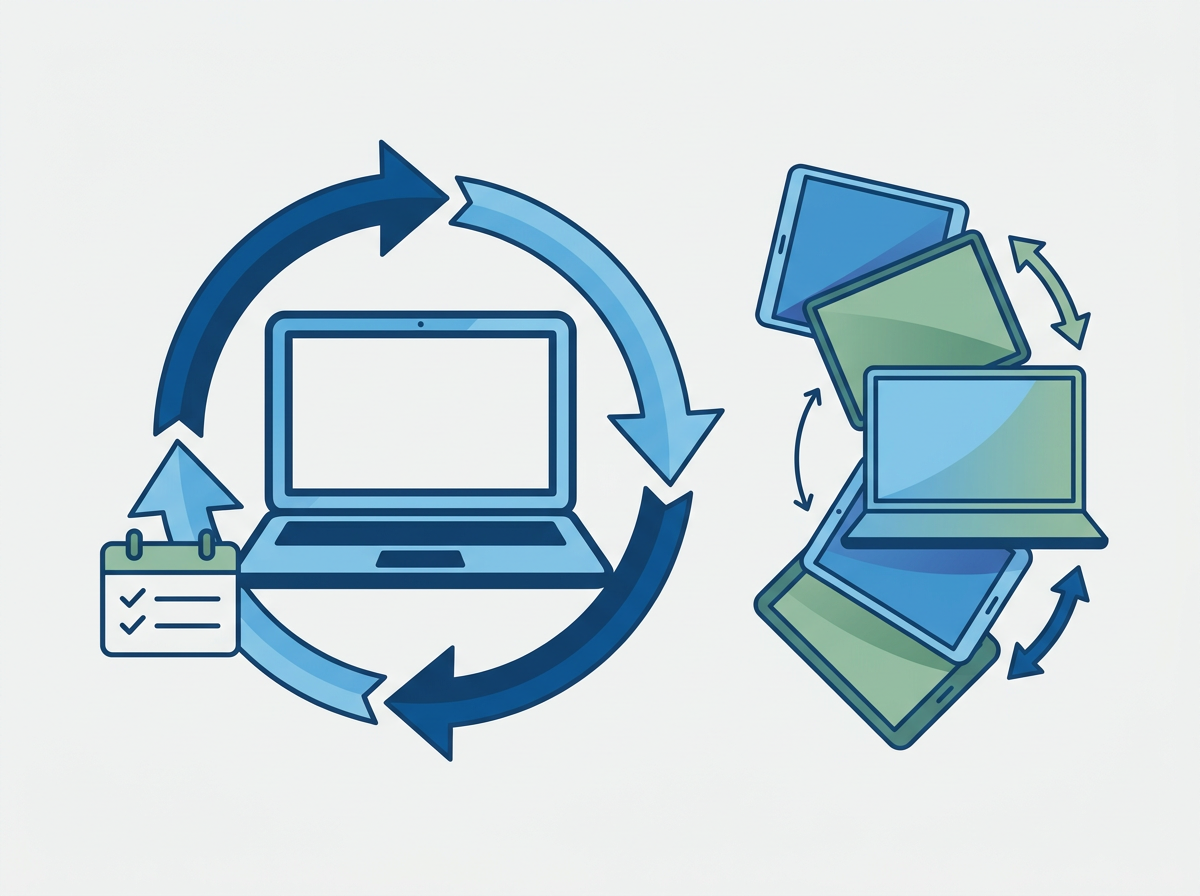
A more proactive model usually includes:
- regular service reviews
- recurring issue analysis
- clearer reporting and recommendations
- security improvement planning
- better documentation
- device and system health monitoring
- roadmap conversations tied to business priorities
This is where support starts to feel less like firefighting and more like proper operational support.
FAQ
Is a reactive helpdesk always a bad thing?
No. It is a necessary part of support. It just should not be the whole model for a growing business.
What is the main benefit of proactive support?
Fewer recurring issues, better visibility, stronger security, and a more stable environment over time.
How do we know if our provider is too reactive?
If the same issues keep returning and the reporting rarely leads to meaningful improvement, that is usually a sign.
If your current support model feels busy but not especially progressive, we can help you move toward a more
proactive IT approach that gives the business better stability and more confidence.