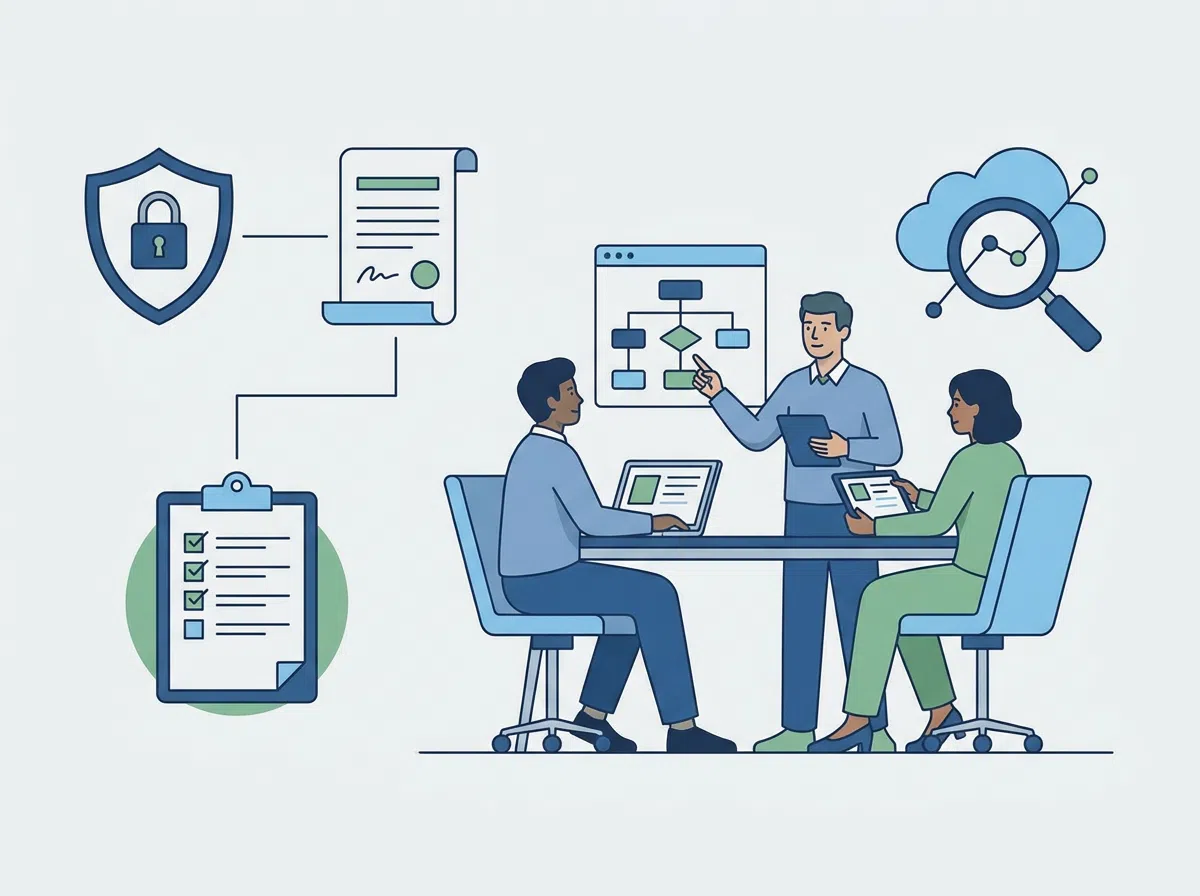
Phishing simulations can reduce real incidents—if done well. Learn how SMEs should run them, what to measure, and how to avoid blame and fatigue.
Phishing Simulations for SMEs: How to Run Them Without Annoying Staff (and Actually Reduce Risk)
Quick answer: phishing simulations work when they’re treated as training (not punishment), measured over time, and paired with simple reporting and technical controls—so staff build the habit of spotting and reporting suspicious emails.
Most SMEs know phishing is a risk, but many struggle to improve behaviour consistently. A phishing simulation is a controlled exercise where staff receive a fake phishing email so you can measure how people respond and then coach improvements. Done badly, it creates resentment and “gotcha” culture. Done well, it reduces real-world incidents because it builds muscle memory: pause, check, report.
Amazing Support is a multi-award-winning, Microsoft Partner and Cyber Essentials Plus certified provider supporting UK SMEs across London, Greater London and Manchester. In our experience, the best programmes are predictable, fair, and focused on improvement—not embarrassment.
Quick definition
Phishing simulation: a safe, internal test email campaign used to train staff to recognise and report phishing attempts.
What to run (and what not to run)
Run simulations that mirror real attacks
- invoice/payment requests
- Microsoft 365 login prompts
- shared file notifications
- supplier impersonation themes
Avoid “trick” scenarios that feel unfair
- overly personal themes
- unrealistic HR/legal threats
- anything designed to shame people
How often should SMEs run simulations?
A practical cadence:
- monthly or bi-monthly for most SMEs
- more frequent during onboarding waves or after incidents
- always pair with short follow-up training
What to measure (so it drives improvement)
Track trends, not one-off results:
- report rate (this is the KPI you want going up)
- click rate (aim down over time)
- repeat clickers (support them privately)
- time-to-report (faster is better)
The one process change that makes simulations pay off
Make reporting easy:
- a clear “report phishing” route
- fast feedback (“thanks, you did the right thing”)
- no blame for reporting something that turns out to be safe
FAQ
Do phishing simulations replace email security tools?
No. They complement them. Controls catch a lot; training reduces the ones that slip through.
Won’t staff hate it?
They will if it’s punitive. If it’s framed as practice and improvement, it’s usually accepted.
What’s the biggest win for SMEs?
Higher report rates and faster reporting—because it limits damage when a real email gets through.
If you’d like with your
cyber security, we can help you set up a simulation programme that’s fair, measurable, and aligned with your real-world risk profile.